
Three Decades of Waiting: Why Rajasthan’s Third-Grade Teachers Remain Trapped in a Policy Vacuum
For 31 years, Rajasthan's education department has failed to finalize a permanent transfer policy for over 2.5 lakh third-grade teachers, leaving thousands of families in distress.
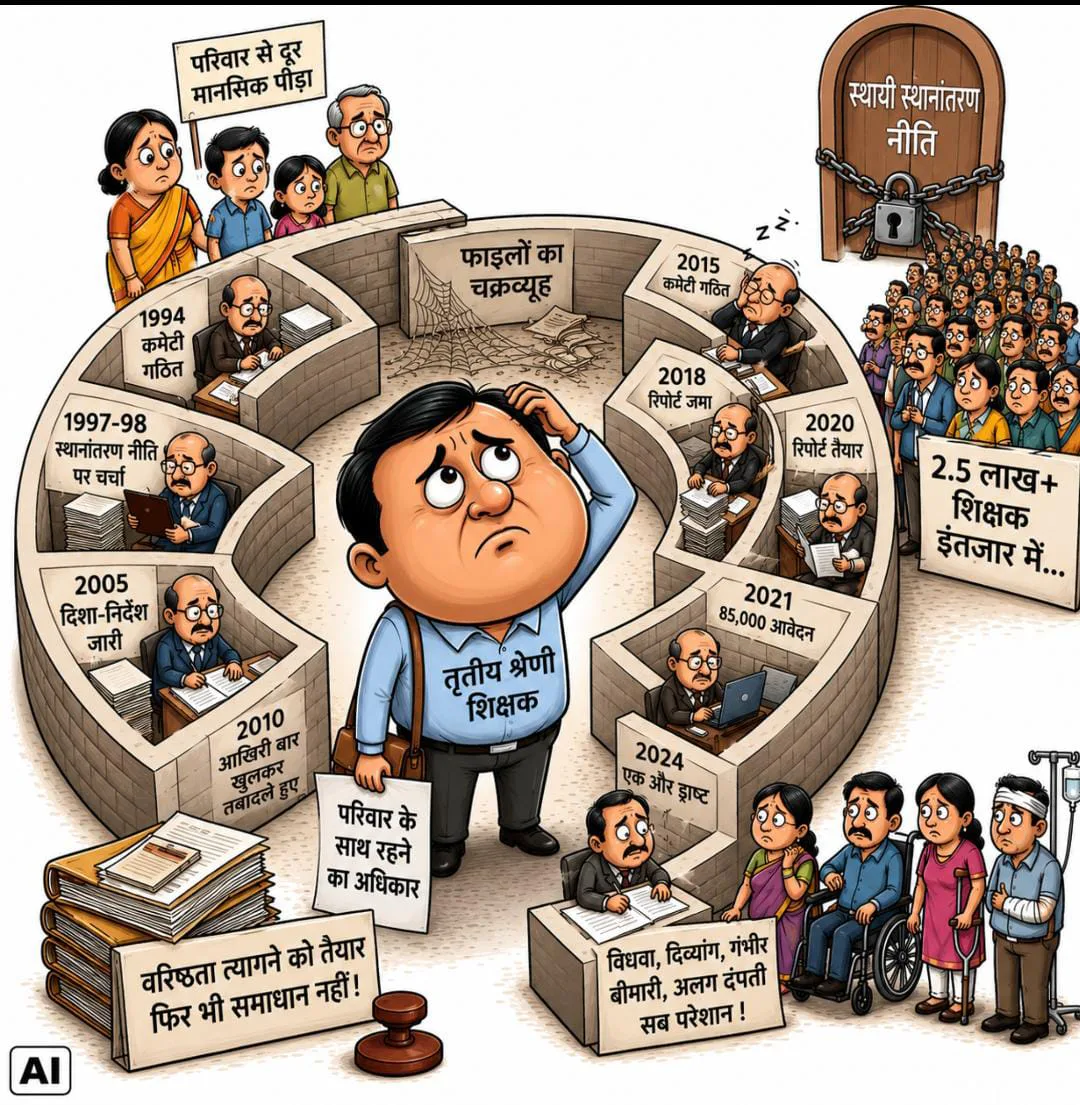
Jaipur. The education landscape in Rajasthan is currently grappling with a persistent administrative crisis that has left over 250,000 third-grade teachers in a state of professional and personal uncertainty. Since 1994, successive administrations have initiated numerous committees and drafted multiple proposals, yet a comprehensive, permanent transfer policy remains elusive. This ongoing failure has effectively turned the dream of a stable workplace into a recurring cycle of disappointment for educators across the state.
The situation has reached a critical juncture, as there have been no regular transfers for this cadre since 2018. While other states have successfully implemented structured transfer mechanisms, Rajasthan’s teachers continue to navigate a system that many describe as indifferent to their needs. The absence of a clear policy has created a significant backlog, with the number of teachers growing alongside the complexity of the administrative hurdles they face.
The human cost of this policy paralysis is profound. Thousands of married couples working in government service find themselves stationed in different districts, unable to reunite. Furthermore, individuals dealing with severe medical conditions, widows, and those with disabilities are currently denied the opportunity to relocate, despite the existence of various draft proposals that have circulated through government offices for years. Even the willingness of many educators to sacrifice their seniority to secure a transfer has not prompted a change in the current bureaucratic stance.
Regional restrictions, particularly the implementation of the dark zone policy in districts such as Barmer, Jaisalmer, and Bikaner, have further complicated the ability of teachers to return to their home regions. Teacher unions have expressed deep frustration, characterizing the current approach as discriminatory and warning of potential state-wide protests if the government continues to ignore their plight. They argue that the administration must move beyond temporary measures and establish a transparent, permanent framework.
As the state enters 2026, the demand for a definitive resolution grows louder. Experts suggest that a stable transfer policy would not only alleviate the immense mental and economic pressure on teachers but also contribute to a more efficient and motivated educational workforce. Whether the government will finally break the cycle of endless drafting and address these long-standing grievances remains the central question for the teaching community.
प्रतिक्रियाएं
टिप्पणियां
अभी कोई स्वीकृत टिप्पणी नहीं है।