
India Surpasses Global Powers in Rail Electrification, Reaches 99.6 Percent Milestone
Indian Railways has achieved a historic milestone by electrifying 99.6 percent of its broad-gauge network, positioning the country second globally only to Switzerland.
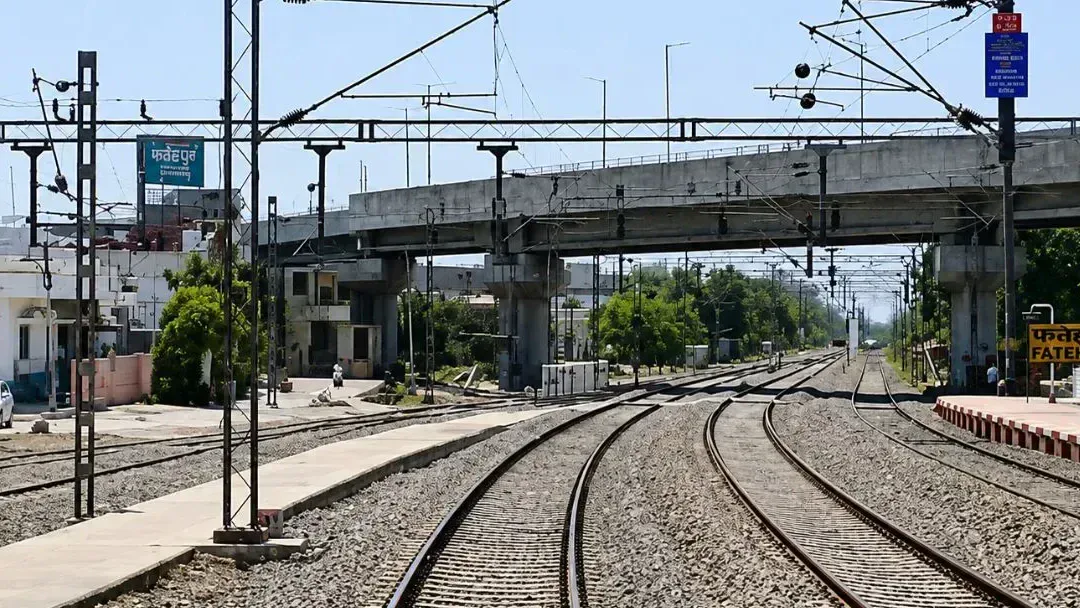
New Delhi. Indian Railways has reached a significant global milestone in its transition toward sustainable and green transportation. According to recent data, the national rail network has successfully electrified 99.6 percent of its broad-gauge tracks, placing India firmly in the second position worldwide, trailing only Switzerland. This achievement marks a major shift in the country's infrastructure, effectively outpacing major global economies including China, Japan, France, and the United Kingdom in the race toward rail decarbonization.
The scale of this transformation is evident when comparing current progress to figures from 2014. Before that year, the total electrified rail route in the country stood at 21,801 kilometers. Over the subsequent twelve years, the national carrier accelerated its efforts, adding 48,072 kilometers of electrified lines to the grid. This rapid expansion has been executed on a mission mode, ensuring that the remaining small fraction of the network is also nearing completion.
The environmental and economic benefits of this transition are substantial. By moving away from fossil fuel-dependent locomotives, the railway has recorded a massive reduction in diesel consumption. Annual diesel usage, which peaked at 293 crore liters during the 2015-16 period, has plummeted to approximately 108 crore liters by the 2024-25 fiscal year. This represents a total saving of 185 crore liters of fuel, significantly lowering the operational costs and the carbon footprint of the national transporter.
Regional divisions have played a critical role in this success, with the North-Western Railway reporting a saving of 7.5 crore liters of diesel within a single year. The shift is also vital for environmental protection, as rail transport is inherently more efficient than road logistics. Data indicates that transporting one ton of cargo by rail emits only 11.5 grams of carbon dioxide per kilometer, compared to 101 grams for the same load transported by road.
This electrification drive has rendered the rail system more energy-efficient and cost-effective. As the final segments of the network are brought under the electric grid, the focus remains on maintaining this momentum to ensure a cleaner future for the nation's logistics and passenger travel sectors. The successful completion of this project underscores a commitment to modernizing India's backbone of connectivity while adhering to global environmental standards.
प्रतिक्रियाएं
टिप्पणियां
अभी कोई स्वीकृत टिप्पणी नहीं है।