
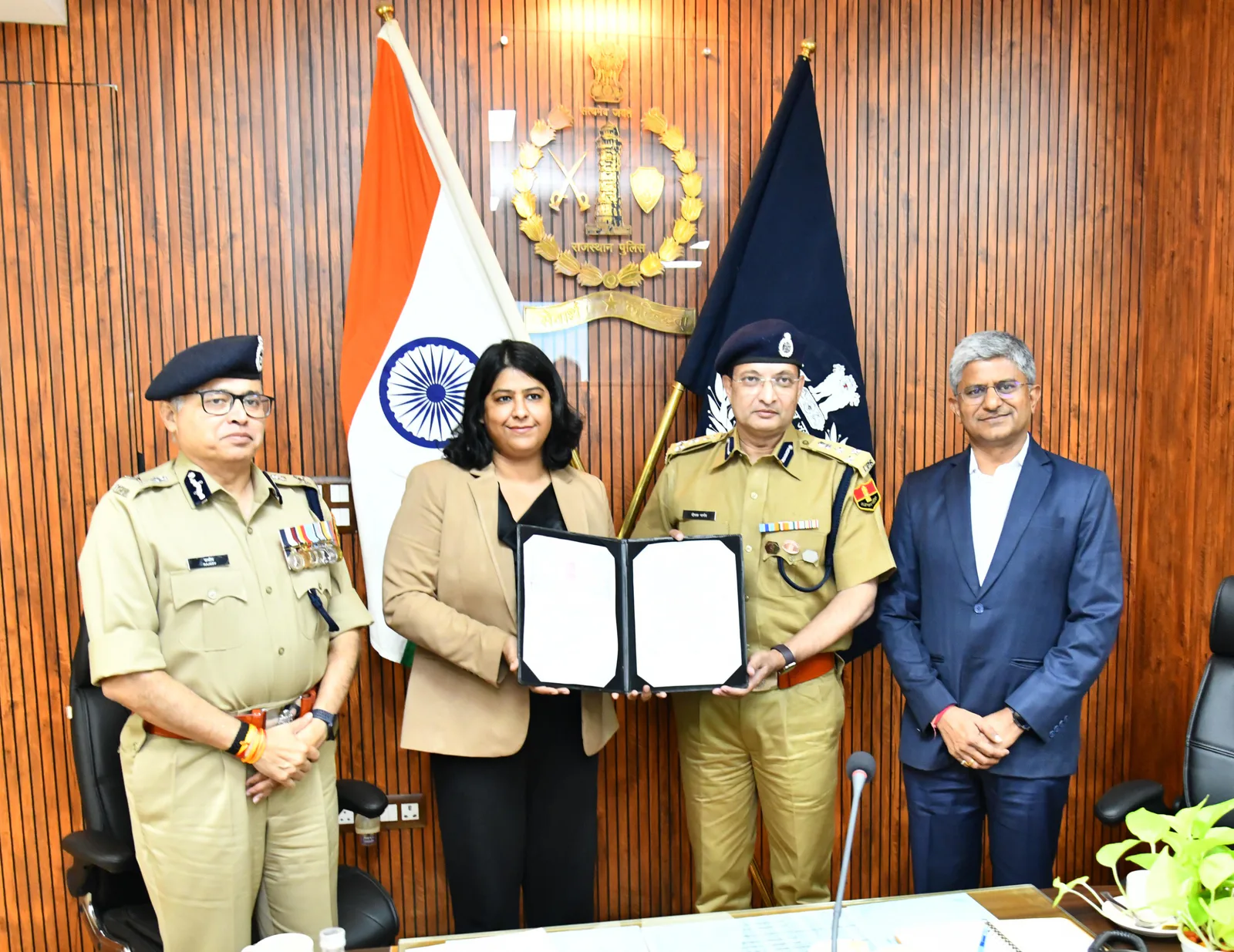
Jaipur. In a significant move to enhance grassroots law enforcement, the Rajasthan Police has entered into a strategic partnership with the Bureau of Police Research and Development (BPR&D) under the Union Ministry of Home Affairs. The agreement, formalized at the Police Headquarters in Jaipur, aims to transform beat policing into a more accountable, technology-driven, and citizen-centric system, aligning with recommendations from the 2025 DGP/IGP Conference.
The memorandum was signed by Deputy Inspector General (Crime) Deepak Bhargava and Dr. Kiran Kang Sidhu, DIG of the National Police Mission at BPR&D, in the presence of Rajasthan Director General of Police Rajeev Kumar Sharma and BPR&D Director General Alok Mittal. This initiative marks a major step in implementing a one-year action plan designed to strengthen the foundational level of police operations.
Director General Alok Mittal emphasized that the beat remains the core unit of effective policing. Under this collaboration, BPR&D will provide expert guidance, training materials, and implementation frameworks, while Rajasthan Police will manage operational execution. The partnership will also facilitate the exchange of best practices between states, with officials specifically praising Rajasthan’s existing beat cluster concept.
DGP Rajeev Kumar Sharma highlighted that the modernization will move beyond traditional methods by integrating advanced technology. The plan includes the creation of geo-mapped beat profiles, identifying hotspots, and utilizing digital tools like the RajCOP e-beat book. These systems will be enhanced with GPS, geo-tagging, and QR-based facilities to ensure real-time monitoring and data-backed decision-making.
The project is being rolled out in a phased manner, starting with nine districts: Sikar, Jaipur North, Dholpur, Didwana-Kuchaman, Kota City, Dungarpur, Churu, Jaisalmer, and Jodhpur West. These districts will serve as models for refining the system before it is expanded statewide. The effectiveness of the new beat structure will be evaluated based on Key Performance Indicators (KPIs), ensuring a structured reporting system from the station level up to the state headquarters.
Community engagement remains a central pillar of this reform. The police intend to strengthen ties with Community Liaison Groups and local volunteers, while institutionalizing regular dialogue with students, senior citizens, and vulnerable populations. The Rajasthan Police Academy has been designated as the nodal training institute to ensure that officers are equipped with the necessary soft skills and technical expertise to implement these changes effectively.
प्रतिक्रियाएं
टिप्पणियां
अभी कोई स्वीकृत टिप्पणी नहीं है।